If you are considering a Miami wedding between June and November, someone has probably asked what you will do if it rains—or if a tropical system approaches South Florida. It is a fair question, and it deserves a more useful answer than either panic or a promise that the weather will cooperate.
The goal is not to predict one date months in advance. It is to understand the season, see the real backup spaces, put responsibilities in writing, and make travel and vendor decisions with room to adjust. Once those pieces are clear, the forecast becomes part of the planning rather than the center of the celebration.
Confidence does not come from a perfect forecast. It comes from knowing exactly what the plan will be if the weather changes.
01
Understand what hurricane season actually means
The official Atlantic hurricane season runs from June 1 through November 30. NOAA identifies September 10 as the climatological peak, with most Atlantic tropical-cyclone activity occurring between mid-August and mid-October. Those dates describe a season, not the forecast for an individual wedding day.
When a storm threatens, use updates from the National Hurricane Center rather than social-media maps or a single long-range weather app. A hurricane watch is generally issued 48 hours before the anticipated arrival of tropical-storm-force winds; a hurricane warning is generally issued 36 hours before. Forecast tracks and local conditions can still change, so the venue, couple, and vendors need a clear decision process.
The official Atlantic hurricane season.
General timing for a hurricane watch before anticipated tropical-storm-force winds.
General timing for a hurricane warning before anticipated tropical-storm-force winds.
02
Ask to see the rain backup—not simply hear that one exists
During a tour, walk through the weather plan as though rain were already on the radar. Ask which space would hold the ceremony, how many guests it accommodates, whether the reception layout changes, and when the final setup decision is made. Also ask how guests move between spaces without crossing an exposed area.
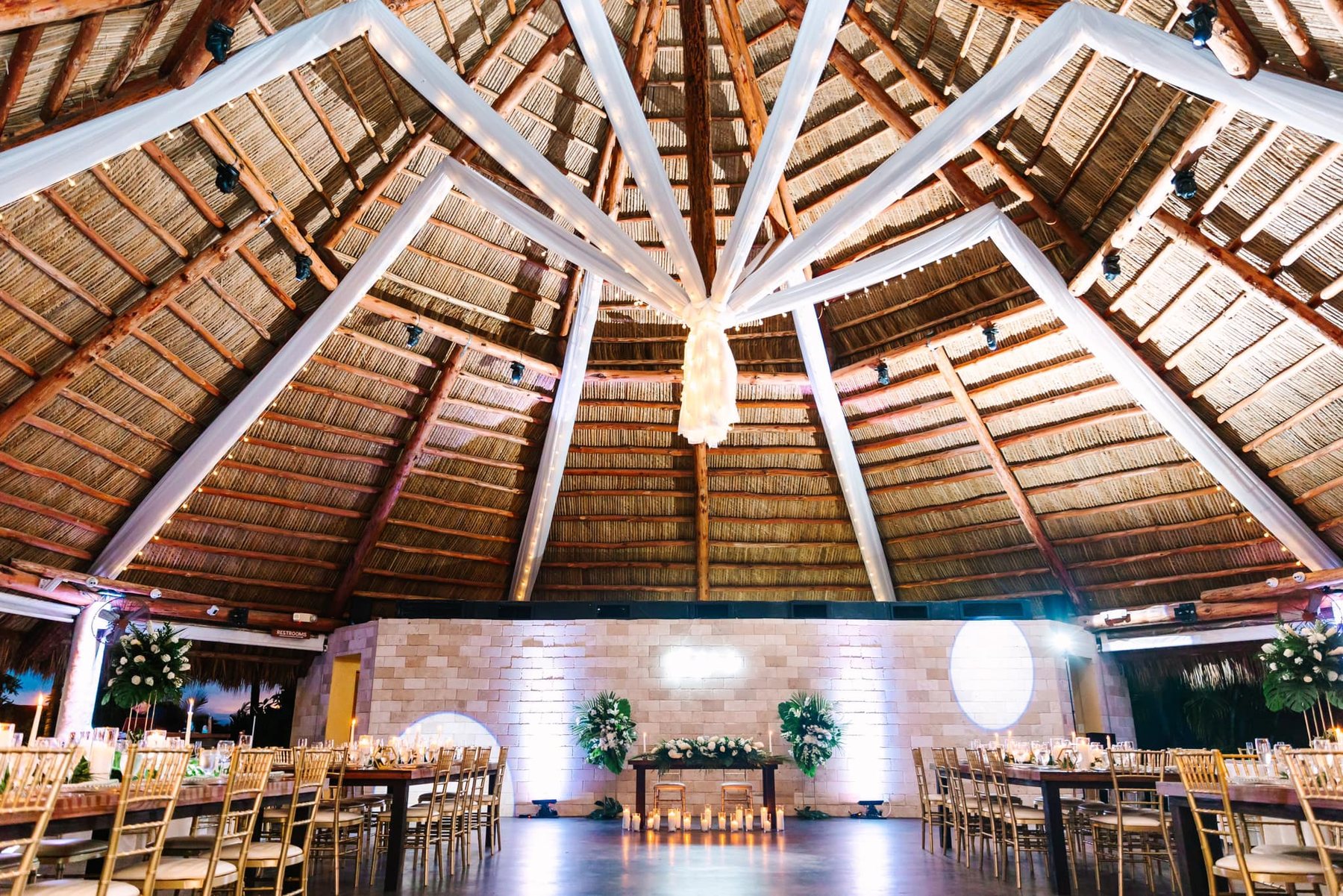
At Longan’s Place, weather moves the waterfall ceremony inside the fully air-conditioned barn at no additional fee. Cocktail hour remains under the tiki/pavilion, dinner remains under the large open-air tiki, and dancing continues inside the barn as planned.
- Which ceremony and reception spaces are covered or indoors?
- How many guests can the backup layout accommodate comfortably?
- Who makes the weather call, and at what point in the day?
- Could the backup layout change the aisle, seating, décor, music, or photo plan?
- Which vendors need to know about the change, and who contacts them?
03
Build flexibility into the timeline without improvising the whole day
A flexible timeline is helpful, but it should not depend on the assumption that every shower will pass quickly. Decide in advance which moments can move, which setup changes require more time, and what must remain fixed because of catering, entertainment, transportation, or photography.
Full weddings at Longan’s Place include a standard five-hour event time. Ask the team and photographer how portraits, ceremony timing, dinner service, and guest movement would work in both the preferred and backup layouts. A little breathing room is useful; an unwritten plan to rearrange everything at the last minute is not.
04
Read the contract and protect the decisions that matter
Before booking, ask for the weather, postponement, cancellation, force-majeure, and rescheduling terms in writing. Look for who makes the decision, what conditions trigger a change, whether payments transfer to a new date, and what happens when the venue can operate but travel becomes difficult.
If you are considering event or travel insurance, compare policies with a licensed provider before purchasing. Coverage, exclusions, deadlines, and named-storm restrictions vary. Do not assume that a policy covers hurricanes, vendor losses, travel disruption, or a voluntary postponement unless the written terms say so.
- Keep the signed venue agreement and all vendor contracts together.
- Confirm how each vendor handles weather delays, cancellation, and rescheduling.
- Ask traveling guests to review change and refund terms before booking.
- Create one reliable way to send schedule or location updates to guests.
- Follow official local and National Hurricane Center guidance if a storm approaches.
05
Compare the real date, package, and guest count
Hurricane season does not automatically create a discount at Longan’s Place. Current full-wedding pricing is based on the selected day, venue rental, package level, and guest count—not simply the month. Venue rental ranges from $5,500 Monday through Thursday to $7,500 on Saturday, before the per-person package, 18% service charge, and 7% Florida sales tax.
Longan’s offers Ceremony Only, Petite and Micro Weddings, and full weddings for celebrations of up to 180 guests. Package inclusions vary, and a proposal does not reserve the date. Begin with the public calendar, then request a written proposal and confirm availability again before booking.
Current full-wedding venue rental range by day, before package, service charge, and tax.
Full-wedding package levels at $55, $65, $75, or $85 per guest.
Full-wedding capacity, depending on the event layout and needs.
06
Leave room for the part you are looking forward to
Planning for weather should make the wedding feel lighter, not turn every conversation into a storm briefing. Once the backup spaces, decision times, guest communication, and contract terms are clear, return your attention to the people, music, food, and photographs that will make the day yours.
Miami’s tropical setting can be beautiful throughout the year. The most reassuring venue is not the one that promises perfect weather. It is the one willing to walk through the less-perfect version of the day with you before you sign.